
Youthful offender and juvenile cases
A juvenile delinquency adjudication is not a conviction for immigration purposes, and neither is a New York youthful offender adjudication, because the Board treats it as the counterpart of a federal juvenile finding. For a young noncitizen that is often the most valuable disposition on the table. But the rule has edges. An adult conviction for something done as a minor is still a conviction, admissions and conduct-based grounds do not need a conviction at all, and other states' youthful dispositions have to be tested one by one.
Current as of October 2026. We re-check this page regularly and after any rule change.
For a defendant under a certain age, the most important request on the plea strategy page may not be about the count or the sentence at all. It may be about which court hears the case and what the court calls the result. A juvenile or youthful offender disposition, where it is available, avoids the word "conviction" entirely, and most of the immigration statute needs that word. This page is about the rule, the exception written into the inadmissibility ground for crimes committed under 18, and the places where neither one helps.
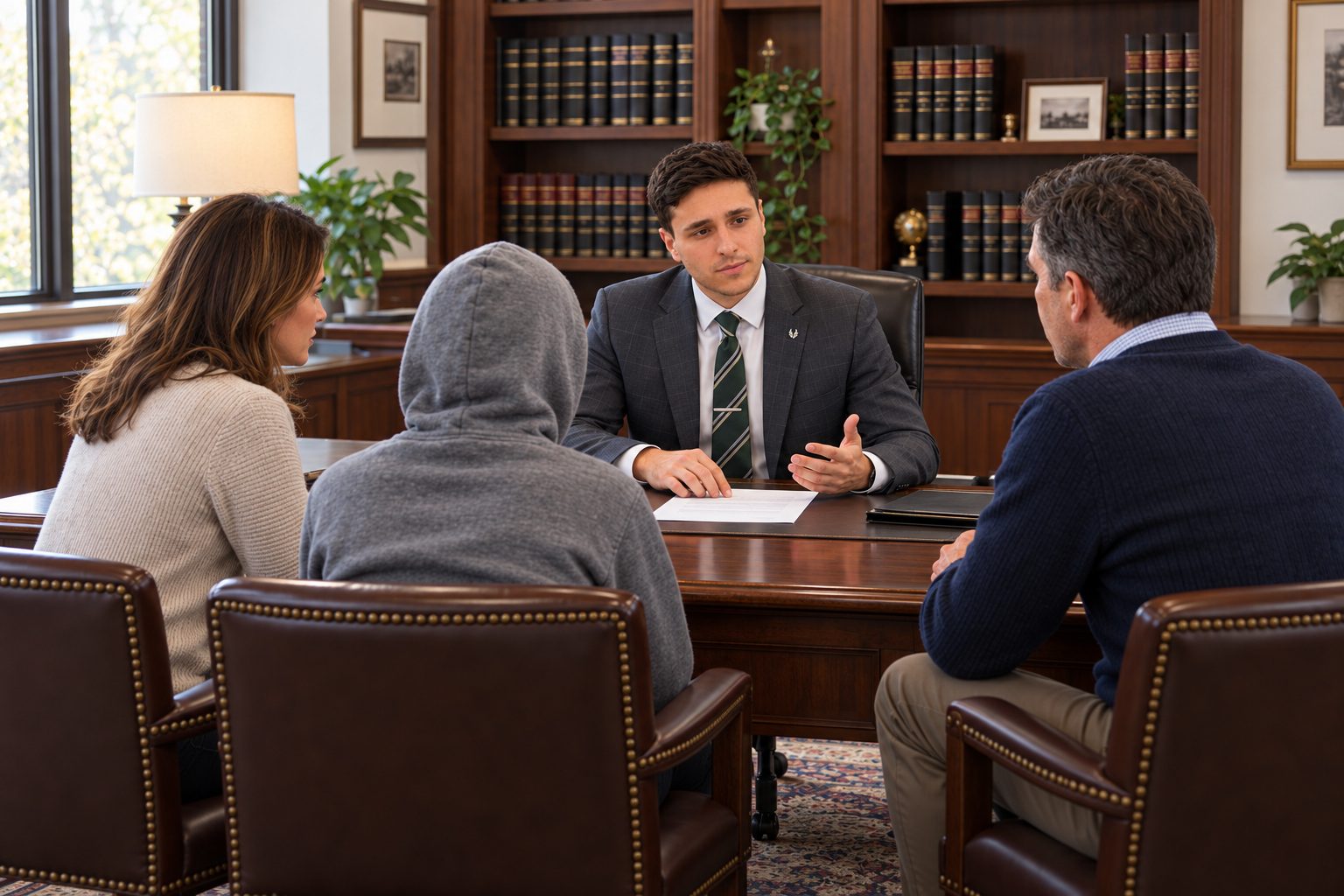
The rule: juvenile and New York youthful offender dispositions are not convictions
The immigration definition of a conviction in INA 101(a)(48)(A) requires a judgment of guilt, or a plea or finding of guilt plus a penalty, in a proceeding that is criminal in nature. A juvenile delinquency adjudication is not that. In Matter of Devison-Charles, 22 I&N Dec. 1362 (BIA 2000), the Board held that a juvenile delinquency adjudication is not a conviction, and then went one step further: a New York youthful offender adjudication under CPL Article 720 is not a conviction either, because it is analogous to a federal juvenile delinquency determination. The reasoning matters as much as the result. The Board did not say that any disposition a state gives to a young person escapes the definition. It compared New York's procedure to the federal juvenile system and found them equivalent.
The practical effect for a New York case is large. Every ground of removal that requires a conviction, every bar to relief that requires one, and every count of misdemeanors or felonies on an application form is written around that word. A youthful offender adjudication is outside all of them. That is why, for a defendant who is eligible, the request for youthful offender treatment is made before any discussion of which count to plead to. The New York page describes the procedure; the conviction page has the full definition.
The proceeding test cuts both ways. Under Matter of Eslamizar, 23 I&N Dec. 684 (BIA 2004), a result is a conviction only if it comes from a proceeding that is criminal in nature with proof beyond a reasonable doubt. That is the same test that decides whether another state's youthful disposition is a conviction, and it is taken up below.
The juvenile exception to the CIMT inadmissibility ground
Separately from the definition of a conviction, the inadmissibility ground for crimes involving moral turpitude has an age-based exception written into it. Under INA 212(a)(2)(A)(ii)(I), the CIMT ground in 212(a)(2)(A)(i)(I) does not apply if the crime was committed when the person was under 18 and more than five years before the date of application for a visa or admission. The statute has further conditions on that exception, so read it, or ask us, before relying on it.
Under 18 at the time, and more than five years before you apply
Both halves have to be true, and the exception belongs to one ground only. It removes a single CIMT from the inadmissibility list. It does not touch the controlled-substance ground, the aggravated felony definition, the deportability grounds in 237(a)(2), or the good moral character bars. And it is about the date of the application, so a person who applies too early loses it, and a person who waits may have it.
Why an adult record for a minor's conduct is different
The two rules above are often confused, and the difference matters. The Devison-Charles rule is about the disposition: a juvenile or youthful offender adjudication is not a conviction, whatever the conduct was. The 212(a)(2)(A)(ii)(I) exception is about the age at the time of the crime, and it applies even where there is a conviction, but only to the CIMT inadmissibility ground. A 17-year-old prosecuted and convicted as an adult has a conviction under 101(a)(48)(A). Being a minor does not change that. What the conviction does then depends on the ground: for a single CIMT, the age-based exception may take it off the inadmissibility list once five years have passed; for a controlled-substance offense, an aggravated felony or a crime of domestic violence, there is no age-based exception and the conviction counts in full. The request for a youthful offender or juvenile disposition, where the law allows it, is the way to avoid the conviction itself, and it is a different request from a plea to a lesser count.
Where the rule stops
A disposition that is not a conviction protects against every rule that requires one. Several rules do not, and they reach the underlying conduct directly.
| Ground or bar | What triggers it | Authority |
|---|---|---|
| CIMT and controlled-substance inadmissibility | An admission of the crime, or of its essential elements, even with no conviction | INA 212(a)(2)(A)(i) |
| Drug trafficking inadmissibility | The government's reason to believe the person is or has been a trafficker or knowingly assisted one; no conviction and no admission required | INA 212(a)(2)(C) |
| Drug abuser or addict deportability | The condition itself, at any time after admission; no conviction required | INA 237(a)(2)(B)(ii) |
| Protection order deportability | A court finding that the person violated the protective portion of an order; no conviction required | INA 237(a)(2)(E)(ii); Matter of Obshatko, 27 I&N Dec. 173 (BIA 2017) |
| Prostitution inadmissibility | Engaging in prostitution or commercialized vice within 10 years of the application | INA 212(a)(2)(D) |
| Good moral character, catch-all | Unlawful acts outside the listed bars that reflect adversely on character, absent extenuating circumstances | 8 C.F.R. 316.10(b)(3)(iii) |
The admissions ground is the one that reaches youthful cases most often. A juvenile or youthful offender proceeding usually involves an allocution, and what is said in it can be an admission of the essential elements of a CIMT or a drug offense for a person later seeking admission or adjustment. The disposition is not a conviction; the words may still be an admission. The record of conviction page explains how the colloquy is drafted with that in mind.
On the other side, the counts that decide TPS and DACA are written in terms of convictions. Under INA 244(c)(2)(B)(i), TPS is unavailable to a person convicted of any felony or two or more misdemeanors committed in the United States, and under 8 C.F.R. 244.1 those terms are defined by the sentence the offense carries. The DACA regulation, as written, speaks of a person convicted of a felony, a significant misdemeanor, or three or more other misdemeanors. A juvenile or New York youthful offender adjudication is not a conviction for either count. TPS also incorporates the 212(a)(2) inadmissibility grounds, which brings the admissions ground back in. The TPS and DACA page covers both programs and the current status of the DACA rule.
Other states
Devison-Charles is a decision about New York's statute. It is not a rule that every youthful offender, youthful trainee or young adult disposition in every state is outside the definition. Each one has to be checked against two things: the 101(a)(48)(A) test, which asks whether the disposition is a judgment of guilt, or a plea or finding of guilt with a penalty, and the Eslamizar test, which asks whether the proceeding was criminal in nature. A disposition that is entered as a judgment of guilt in an adult criminal court, with a sentence, and merely carries a youthful label for state record-keeping purposes, is on the wrong side of both tests. A disposition that is handled in a separate proceeding with its own procedure may be on the right side, and the question is whether it is close enough to the federal juvenile system for the Board's reasoning to apply.
We have not confirmed an answer to that question for New Jersey or Florida from a primary source, so we will not tell you in general whether either state's youthful dispositions are convictions. If you have a youthful disposition from a state other than New York, the answer comes from reading the statute that created it against the two tests above, with the certified record of the disposition in hand. That is a task for a consultation, and it is one we do regularly.
What to ask for, if the defendant is young enough
Ask, before anything else, whether the case can be resolved as a juvenile matter or with youthful offender treatment. In New York, that is the disposition the Board has held is not a conviction. Then ask what the defendant will be required to say, because the admission grounds are not turned off by the label. And keep the paperwork: the certified order showing the disposition is the document that will have to be produced in every later immigration application.
Read next: what counts as a conviction, deferred and withheld adjudication, the petty offense exception, or pleas in New York.
Common questions
I got youthful offender treatment in New York. Do I have a conviction for immigration?
No. Under Matter of Devison-Charles, 22 I&N Dec. 1362 (BIA 2000), a New York youthful offender adjudication under CPL Article 720 is not a conviction under INA 101(a)(48)(A), because it is analogous to a federal juvenile delinquency determination. That takes the adjudication out of every ground of removal and every bar to relief that requires a conviction. It does not take the underlying conduct out of the grounds that do not require one.
I was 17 when it happened but I was charged as an adult. Does the juvenile rule help?
The conviction is a conviction; being a minor at the time does not change that unless the case was actually handled as a juvenile or youthful offender matter. What may still help is the age-based exception in INA 212(a)(2)(A)(ii)(I): the CIMT inadmissibility ground does not apply if the crime was committed when you were under 18 and more than five years before the application for a visa or admission. That exception is about the CIMT inadmissibility ground only, not deportability, drugs or aggravated felonies.
Does a youthful offender adjudication count against DACA or TPS?
The criminal bars for both programs are written in terms of convictions: TPS is denied for a felony or two or more misdemeanors of which the person has been convicted, and the DACA regulation speaks of a person convicted of a felony, a listed misdemeanor or three other misdemeanors. A disposition that is not a conviction under the immigration definition is not a conviction for those counts. The inadmissibility grounds that also apply to TPS, including the admissions ground, are a separate question.
I have a youthful offender disposition from New Jersey or Florida. Is it a conviction?
We cannot give you a general answer, because we have not confirmed one from a primary source. The test is whether the disposition is a judgment of guilt, or a plea or finding of guilt with a penalty, in a proceeding that is criminal in nature. Whether a particular state's youthful disposition passes that test, and whether it is close enough to a federal juvenile determination to fall under Devison-Charles, has to be checked against the statute that created it. Bring the paperwork.
Tell us about the charge before you take the plea. Not after.
You get a free conversation with an immigration attorney, in your language. We speak English, Russian, Spanish and Uzbek in-house, and we bring in a live interpreter for anything else. We will read the charge against the immigration statute, tell you what the offered plea does to your status and to every form of relief, and tell you what to ask your criminal lawyer to negotiate instead. If the plea has already been entered, we will tell you what can still be done.