
Sentence modification
Several immigration rules turn on the number of days the court ordered, not on the crime. For those rules a shorter sentence changes the result, and a criminal court can be asked to change it. But the immigration judge gives a modified sentence effect only if the change was based on a procedural or substantive defect in the original sentencing. A reduction entered because a shorter sentence would help with immigration is not given effect, and a suspended sentence counts in full.
Current as of October 2026. We re-check this page regularly and after any rule change.
Two questions decide whether a sentence modification is worth pursuing. Does the immigration problem actually turn on the sentence, or on the offense? And is there a defect in the original sentencing that the criminal court can correct? If the answer to either is no, a shorter sentence does not solve the problem, and the work belongs on the vacating a plea page instead. This page is the sentence-based rules, the standard the immigration judge applies to a modified sentence, and how the order has to be presented. It is the second of the three questions on the after a plea page.
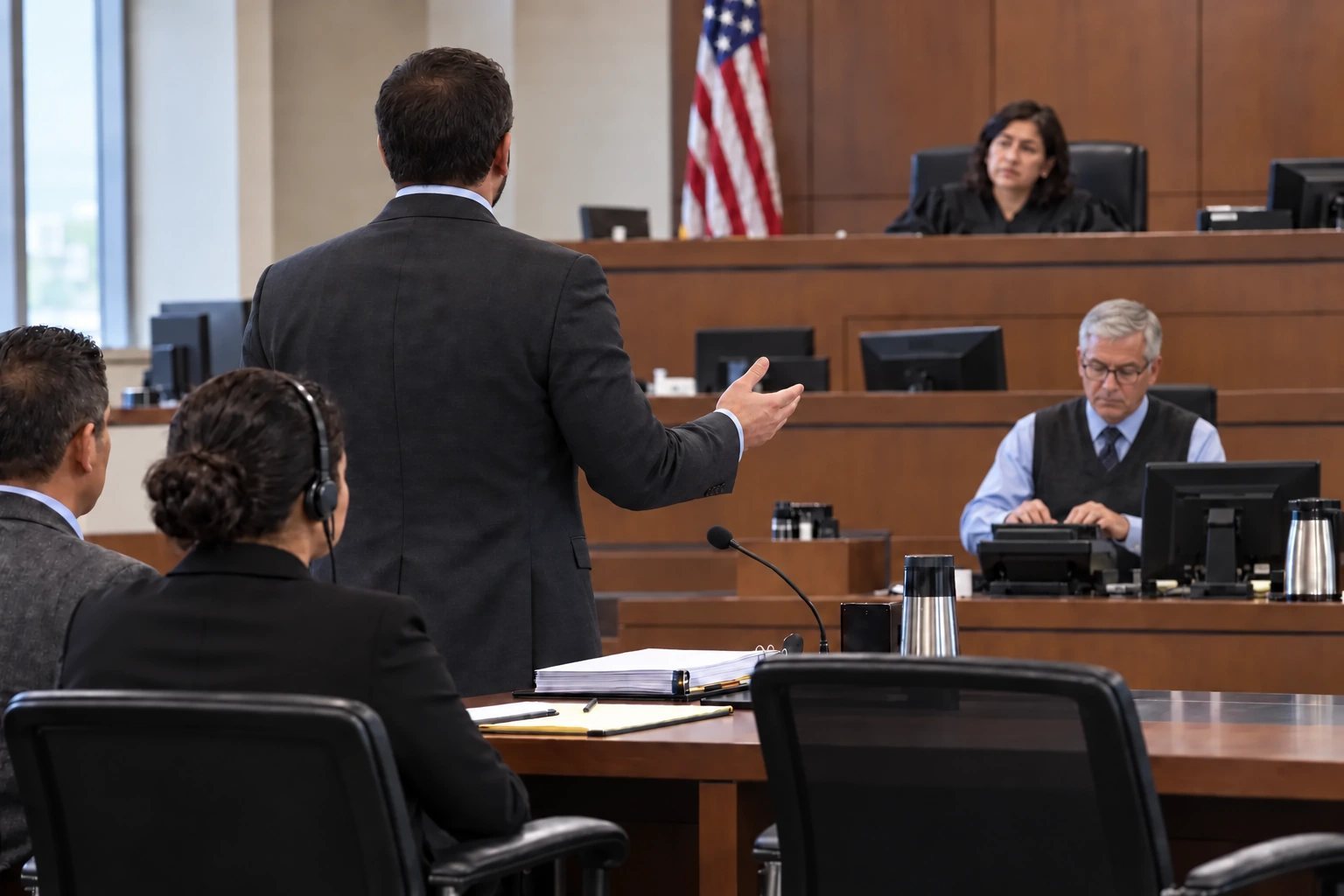
The rules that turn on the sentence
Most grounds of removal turn on what the offense is. A handful turn on the number the court ordered, or on the number it could have ordered. These are the rules a sentence modification can reach.
| Rule | What it measures | Threshold | Authority |
|---|---|---|---|
| Aggravated felony: crime of violence | Term of imprisonment imposed | At least one year | INA 101(a)(43)(F) |
| Aggravated felony: theft, receipt of stolen property, burglary | Term of imprisonment imposed | At least one year | INA 101(a)(43)(G) |
| Aggravated felony: document fraud under 18 U.S.C. 1543 or 1546(a) | Term of imprisonment imposed | At least 12 months | INA 101(a)(43)(P) |
| Aggravated felony: commercial bribery, counterfeiting, forgery, altered vehicle identification numbers | Term of imprisonment imposed | At least one year | INA 101(a)(43)(R) |
| Aggravated felony: obstruction of justice, perjury, subornation, bribery of a witness | Term of imprisonment imposed | At least one year | INA 101(a)(43)(S) |
| Deportability: one CIMT within five years of admission | The sentence that may be imposed: the statutory maximum, not your sentence | One year or longer possible | INA 237(a)(2)(A)(i) |
| Mandatory detention for that CIMT ground | Sentence imposed | At least one year | INA 236(c)(1)(C) |
| Petty offense exception to the CIMT inadmissibility ground | Both: the maximum possible and the sentence imposed | Maximum not exceeding one year, and sentence imposed not exceeding six months | INA 212(a)(2)(A)(ii)(II) |
| Inadmissibility: multiple convictions | Aggregate sentences to confinement | Five years or more | INA 212(a)(2)(B) |
| Good moral character, conditional bar | Confinement as a result of a conviction during the statutory period | 180 days or more | INA 101(f)(7); 8 C.F.R. 316.10(b)(2) |
| Withholding of removal, per se particularly serious crime | Aggregate term of imprisonment for an aggravated felony or felonies | At least five years | INA 241(b)(3)(B) |
Read "What it measures" carefully. The deportability ground in INA 237(a)(2)(A)(i) asks what sentence the statute allowed, and no modification of your sentence changes the statutory maximum. The petty offense exception asks both questions, so a sentence of six months or less does not help if the offense carried a maximum above one year. The aggravated felony entries ask only what was imposed, which is where a modification can matter most, and the 364-day page explains why one day is the whole difference.
A suspended year is a year
Under INA 101(a)(48)(B), a term of imprisonment includes the period ordered by the court "regardless of any suspension of the imposition or execution of that imprisonment or sentence in whole or in part." Time served does not matter. Probation does not matter unless a term was imposed and suspended as part of it. A modification that converts a year in custody to a year suspended changes nothing. The number the court ordered is the number.
The standard: Thomas & Thompson
In Matter of Thomas & Thompson, 27 I&N Dec. 674 (A.G. 2019), the Attorney General held that a sentence modification is given effect for immigration purposes only if it was based on a procedural or substantive defect in the original sentencing. The decision applies to sentences the same test that Matter of Pickering, 23 I&N Dec. 621 (BIA 2003), applies to convictions: the reason the criminal court acted controls, not the label on the order and not the state court's willingness to enter it.
The practical effect is that the question is never "can the judge reduce it to 364 days." Many criminal judges will. The question is "was there something wrong with the sentence as it was imposed." If the original sentencing was correct and the only reason for the change is that the number produces an immigration consequence, the immigration judge counts the original number. If the sentence was not one the law allowed, or was reached through a process that was defective, the modification corrects a defect and is given effect.
Which defects qualify is decided case by case from the criminal court's record. The Attorney General's decision states the test and gives no list of qualifying defects, and we will not invent one. What we do is read the original sentencing against the plea agreement, the statute and the transcript with criminal counsel and identify whether a defect exists that the court can be asked to correct.
Two kinds of order, two results
Criminal courts change sentences in two very different ways, and the immigration result follows the difference.
| Vacate the sentence and re-sentence for a defect | Reduce the sentence, dated back to the original date, for immigration reasons | |
|---|---|---|
| What the motion says | The original sentence was unlawful, or was imposed through a defective process, and asks the court to correct it | The sentence causes an immigration consequence and asks the court to lower it, often "nunc pro tunc" to the original sentencing date |
| What the order says | Finds the defect, vacates the sentence, and imposes a new one | Reduces the number and dates the change back; usually recites no defect |
| What the immigration judge counts | The new sentence | The original sentence |
| Authority | Thomas & Thompson: a procedural or substantive defect | Thomas & Thompson: no defect, no effect |
Dating an order back to the original sentencing does not change what the order was for. A nunc pro tunc reduction entered because the defendant is facing removal is a reduction entered for immigration reasons, whatever date it carries. The immigration judge reads the motion that produced it.
The safer sequence
The time to get the number right is at sentencing. A defense lawyer who asks for 364 days rather than "a year," or for a sentence that keeps the aggregate below five years, is asking for an ordinary thing that prosecutors agree to every day. A modification afterward has to clear a standard that a request beforehand never faces. The plea strategy pages cover what to ask for and when.
How a modified sentence is presented
A modified sentence reaches the immigration judge as a set of documents, and the documents have to tell one consistent story. The record the judge reads is the same record described on the record of conviction page, with the modification added to it.
The motion
It pleads the procedural or substantive defect in the original sentencing. It does not ask the court to help the defendant with immigration. If the motion mentions immigration at all, it does so to explain why the defect matters, not as the ground.
The order
It recites the defect the court found and the sentence it now imposes. "Sentence reduced to 364 days" with nothing else is not enough. The immigration judge is looking for the reason, and the order is the first place the reason has to appear.
The amended judgment or commitment
The document the court's clerk issues showing the sentence as it now stands, so that the number in the order and the number in the judgment match.
The transcript
If there was a hearing, what was said at it. DHS can obtain it, and a transcript in which the judge says the change is to avoid deportation will be read against an order that recites a defect.
Once the modification exists, it is used the same way a vacatur is used. If the case is pending before the immigration judge, it goes to the charge or to eligibility for relief, and under Pereida v. Wilkinson, 592 U.S. 224 (2021), an applicant for relief bears the burden of showing the conviction is not disqualifying, so the full set of documents has to be in the file before the judge rules. If a removal order is already final, it goes into a motion to reopen, generally within 90 days of the order under INA 240(c)(7), and the modification has to exist before the motion is filed. The post-conviction relief page covers both routes, and the court side lives on immigrationtrial.com.
What a shorter sentence does not change
A sentence modification reaches only the rules in the table above. It does nothing for a ground that turns on the offense: the controlled-substance ground in INA 237(a)(2)(B)(i), the firearms ground in 237(a)(2)(C), the domestic-violence ground in 237(a)(2)(E)(i), the aggravated felony entries that carry no sentence threshold, or a second CIMT under 237(a)(2)(A)(ii). For those, the sentence was never the problem, and the only conviction-side remedy is a vacatur for a defect in the plea itself. Run the conviction through the plea tool with the sentence entered both ways and it will show which rules move and which do not.
Read next: the 364-day sentence, post-conviction relief, aggravated felonies, or the petty offense exception.
Common questions
Which rules does a shorter sentence actually change?
The ones that measure the sentence. The aggravated felony entries for a crime of violence, theft or burglary, document fraud, forgery and obstruction turn on a term of imprisonment of at least one year. The petty offense exception asks whether the sentence imposed was six months or less. Good moral character is barred by confinement of 180 days or more during the statutory period. Withholding of removal is barred per se by an aggravated felony with an aggregate sentence of five years or more, and multiple convictions with aggregate sentences of five years or more are a ground of inadmissibility. A shorter sentence does nothing for a rule that turns on the offense alone, such as the controlled-substance, firearms or domestic-violence grounds.
Will the immigration judge accept a sentence the criminal court reduced?
Only if it was reduced for a defect. Under Matter of Thomas and Thompson, 27 I&N Dec. 674 (A.G. 2019), a sentence modification is given effect for immigration purposes only if it was based on a procedural or substantive defect in the original sentencing. A reduction granted because the original sentence causes immigration consequences is not given effect, however the state court labels it.
My sentence was suspended. Does that help?
No. Under INA 101(a)(48)(B), a term of imprisonment includes the period ordered by the court regardless of any suspension of the imposition or execution of the sentence, in whole or in part. A one-year sentence suspended in full is a one-year sentence for every rule that measures the sentence.
What does the order need to say?
The reason. The immigration judge reads the motion, the order and the amended judgment, and looks for the procedural or substantive defect the modification was based on. An order that recites the defect, an amended judgment that shows the new sentence, and a record that is consistent with both is what gets presented. An order that says only that the sentence is reduced to 364 days, entered on a motion that talked about immigration, is what gets rejected.
Tell us about the charge before you take the plea. Not after.
You get a free conversation with an immigration attorney, in your language. We speak English, Russian, Spanish and Uzbek in-house, and we bring in a live interpreter for anything else. We will read the charge against the immigration statute, tell you what the offered plea does to your status and to every form of relief, and tell you what to ask your criminal lawyer to negotiate instead. If the plea has already been entered, we will tell you what can still be done.