
DUI and driving offenses
A simple DUI is not a crime involving moral turpitude, is not a crime of violence, and is not, by itself, a ground of removal. That is the rule, and it holds for a person with several of them. What changes the answer is an added element: driving while knowing the license is suspended, which the Board has held is a crime involving moral turpitude, or an injury with a mental state above negligence. And even a simple DUI has consequences for good moral character, for DACA and TPS, and for anyone whose sentence reaches 180 days.
Current as of October 2026. We re-check this page regularly and after any rule change.
One question decides whether a DUI plea is a ground of removal: does the offense have an element beyond driving impaired? Knowledge that the license was suspended. Injury with a mental state above negligence. Without an added element, the answer for the criminal grounds is no. A second set of questions decides what a DUI does to good moral character, to DACA and TPS, and to the sentence, and those apply even to the simplest DUI. This page takes both sets in order. The map of every criminal ground is on the crimes and removal page.
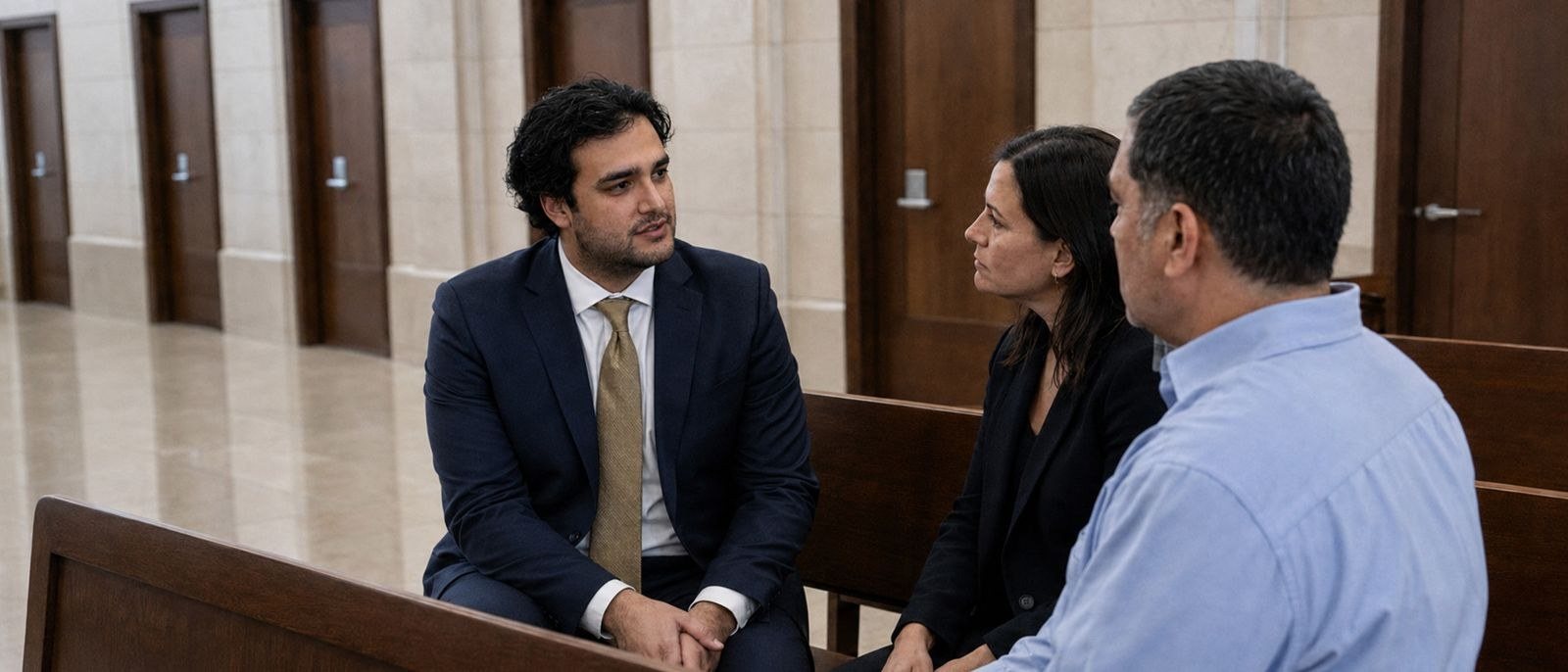
Simple DUI: not a ground of removal
The criminal grounds of deportability in INA 237(a)(2) and inadmissibility in INA 212(a)(2) are lists of categories: crimes involving moral turpitude, aggravated felonies, controlled substances, firearms, domestic violence, and the rest. Driving under the influence is not a category on either list. So a DUI is a ground of removal only if it fits one of the listed categories, and the two that come up are moral turpitude and crime of violence. Simple DUI fits neither.
- Not a crime involving moral turpitude. In Matter of Torres-Varela, 23 I&N Dec. 78 (BIA 2001) (en banc), the Board held that a simple DUI is not a crime involving moral turpitude, and that multiple simple DUI convictions do not become one by accumulation. The test from Matter of Silva-Trevino, 26 I&N Dec. 826 (BIA 2016), requires reprehensible conduct with some form of scienter, and a simple DUI statute requires neither an intent nor a result.
- Not a crime of violence. In Leocal v. Ashcroft, 543 U.S. 1 (2004), the Supreme Court held that "use of physical force" under 18 U.S.C. 16 requires a higher degree of intent than negligent or merely accidental conduct, and that a DUI causing injury with a negligence mental state is not a crime of violence. That takes a simple DUI, and a negligent DUI-with-injury, off the (F) aggravated felony entry regardless of sentence.
The result: a person with one simple DUI conviction, or three, is not deportable and not inadmissible on the criminal grounds because of them. The rest of this page is about what changes that, and about the consequences a DUI has anyway.
Matter of Torres-Varela, 23 I&N Dec. 78 (BIA 2001) (en banc); Leocal v. Ashcroft, 543 U.S. 1 (2004); 18 U.S.C. 16(a); Sessions v. Dimaya, 584 U.S. 148 (2018).
When a DUI becomes a ground
Aggravated DUI: knowledge of a suspended license
In Matter of Lopez-Meza, 22 I&N Dec. 1188 (BIA 1999), the Board held that aggravated DUI, driving under the influence while knowing that one's license is suspended or revoked, is a crime involving moral turpitude. The added element is the knowledge. A person who knows they are not permitted to drive at all, and drives impaired anyway, has the guilty mind that simple DUI lacks. A plea to an aggravated DUI count is therefore a plea to a crime involving moral turpitude, with everything that follows: the one-CIMT five-year rule, the two-CIMT rule, the inadmissibility ground, and the bars that turn on them. The moral turpitude page covers those.
The suspended-license element is the trap
Where a DUI is charged together with driving on a suspended license, the plea can be to the DUI alone, to the suspended-license offense alone, or to an aggravated count that combines them. Only the combined count with a knowledge element has been held to be a crime involving moral turpitude. Whether a stand-alone driving-while-suspended offense is one depends on its elements, so bring us the statute. Two separate pleas on the same day are not the same as one plea to a combined count, and the record should show which it was.
DUI with injury: the crime-of-violence question
Leocal decided the negligence case. It did not decide the case of a DUI-with-injury statute whose mental state is recklessness or higher. Under Borden v. United States, 593 U.S. 420 (2021), an offense that can be committed recklessly does not have the use of force "against the person of another" as an element under the identically worded elements clause of the Armed Career Criminal Act. How the Board and the circuits apply Borden to 18 U.S.C. 16(a) is a question we treat as open. We have not found a published Board decision on it, so we would not give you a rule beyond that. What can be said is this: a DUI-with-injury count whose mental state is negligence is not a crime of violence under Leocal; a count that requires intent is analyzed as any other assault would be; and a count that requires recklessness is the one where the answer depends on the circuit. If the sentence would be a year or more, that question decides whether the plea is an aggravated felony under INA 101(a)(43)(F), and it should be answered before the plea, not after.
Whether a DUI-with-injury statute is also a crime involving moral turpitude depends on the same mental-state analysis under Silva-Trevino, so the answer has to come from your statute.
Good moral character: where a DUI counts anyway
Naturalization requires good moral character for the statutory period, five years or three for the spouse of a citizen, and through the oath. INA 316(a)(3), 319(a); 8 C.F.R. 316.10(a)(1). Cancellation for non-permanent residents requires it for ten years, and voluntary departure at the conclusion of proceedings for five. A DUI that is not a ground of removal can still cost good moral character, in four ways.
| Situation | Effect | Authority |
|---|---|---|
| Two or more DUI convictions during the statutory period | A rebuttable presumption against good moral character | Matter of Castillo-Perez, 27 I&N Dec. 664 (A.G. 2019) |
| Habitual drunkard | Conditional bar during the statutory period | INA 101(f)(1); 8 C.F.R. 316.10(b)(2) |
| Confinement of 180 days or more as a result of a conviction during the period | Conditional bar, regardless of the offense | INA 101(f)(7); 8 C.F.R. 316.10(b)(2) |
| Probation, parole or a suspended sentence still running | The application will not be approved until it is completed, and conduct during the period is considered | 8 C.F.R. 316.10(c)(1) |
| One DUI, not otherwise listed | An unlawful act outside the listed bars may still be found to reflect adversely on character unless extenuating circumstances are shown | 8 C.F.R. 316.10(b)(3)(iii) |
The 180-day line is the one to watch at sentencing. It is confinement as a result of a conviction, counted during the statutory period, and it does not care whether the offense was a DUI or anything else. A DUI sentence that puts a person in custody for 180 days or more is a conditional bar to good moral character for the years it falls in. The good moral character page and the naturalization page cover the full set of bars.
Castillo-Perez is an Attorney General decision, and its presumption is rebuttable. What rebuts it is a question for the naturalization or cancellation case itself. What the plea controls is whether there is a second DUI conviction inside the period at all.
DACA and TPS
DACA. The regulation at 8 C.F.R. 236.22(b)(6) lists the criminal criteria: not convicted of a felony, a misdemeanor listed in 8 C.F.R. 236.22(b)(6)(i) (the 2012 memo called these "significant misdemeanors"; the regulation does not use the phrase), or three or more other misdemeanors not occurring on the same date and not arising out of the same act. The regulation's list at 236.22(b)(6)(i) includes driving under the influence, along with domestic violence, sexual abuse, burglary, unlawful weapons possession, drug distribution or trafficking. 236.22(b)(6)(ii) adds any misdemeanor with a sentence of more than 90 days in custody. So under the text of the regulation, one DUI conviction is disqualifying on its own. One caution: the program's status is the subject of ongoing litigation, so what the regulation says and what is being granted may differ on the day you read this. The TPS and DACA page is where we keep that current.
TPS. Under INA 244(c)(2)(B)(i), a person is not eligible for TPS if convicted of any felony or two or more misdemeanors committed in the United States. Under 8 C.F.R. 244.1, a felony is a crime punishable by more than one year, and a misdemeanor is one punishable by one year or less and more than five days. A misdemeanor DUI is one misdemeanor toward the two. A DUI charged as a felony is disqualifying on its own. The classification for TPS follows the maximum sentence, not the state's label.
What this means at the plea
For most people, a simple DUI plea is not the immigration emergency it is assumed to be. The points to negotiate are the elements and the numbers.
No suspended-license element
A DUI count without a suspended-license knowledge element, rather than an aggravated count.
Negligence, not recklessness or intent
Where injury is alleged, a count whose mental state is negligence rather than recklessness or intent.
Confinement under 180 days
A sentence that keeps confinement under 180 days, the conditional bar to good moral character.
Under one year, if it could be a crime of violence
If the count could be a crime of violence, a sentence under one year keeps it off the (F) aggravated felony entry.
On TPS: a misdemeanor, and only one
For a person on TPS, a misdemeanor rather than a felony count, and no second misdemeanor.
Toward naturalization: no second DUI
No second DUI inside the statutory period, and a probation term that ends before the application is filed.
None of these removes every risk from a DUI plea for every status; each removes a specific consequence. The plea strategy pages cover how they are negotiated.
Read next: good moral character, crimes involving moral turpitude, TPS and DACA pleas, or naturalization and a criminal record.
Common questions
Can I be deported for a DUI?
A simple DUI, without more, is not on any of the criminal grounds of removal. Under Matter of Torres-Varela, it is not a crime involving moral turpitude, and multiple simple DUIs do not become one. Under Leocal v. Ashcroft, a DUI, even one causing injury, with a negligence mental state is not a crime of violence. What can make a DUI a ground is an added element, such as knowing the license was suspended, which the Board held is a crime involving moral turpitude in Matter of Lopez-Meza. The statute you plead under decides it.
Will a DUI stop me from becoming a citizen?
One DUI is not among the listed bars to good moral character, though any unlawful act can be considered. Two or more DUI convictions during the statutory period create a rebuttable presumption against good moral character under Matter of Castillo-Perez, an Attorney General decision, and a habitual drunkard is barred outright under INA 101(f)(1). A DUI sentence that results in 180 days or more of confinement is a conditional bar on its own, and no application is approved while probation is still running.
Does a DUI affect DACA?
The DACA regulation lists driving under the influence among the misdemeanors that disqualify regardless of sentence, 8 C.F.R. 236.22(b)(6)(i), and one such conviction disqualifies under the regulatory criteria. That is the text of the regulation. The current status of the program is subject to ongoing litigation.
What about TPS?
TPS is not available to a person convicted of any felony or two or more misdemeanors committed in the United States. For TPS, a misdemeanor is a crime punishable by one year or less and more than five days, and a felony is one punishable by more than a year. A DUI classified as a misdemeanor counts as one toward the two, and a felony DUI, such as a repeat offense charged as a felony, is disqualifying on its own.
Tell us about the charge before you take the plea. Not after.
You get a free conversation with an immigration attorney, in your language. We speak English, Russian, Spanish and Uzbek in-house, and we bring in a live interpreter for anything else. We will read the charge against the immigration statute, tell you what the offered plea does to your status and to every form of relief, and tell you what to ask your criminal lawyer to negotiate instead. If the plea has already been entered, we will tell you what can still be done.